Will it look overdone?
It shouldn't. Most of the results people dislike come from too much filler, filler placed above the lip line, or top-up after top-up without ever letting the last one go. We start small, review at two weeks, and will tell you when to stop.
Does it hurt?
Less than most people expect, though the lips are the most sensitive part of the face. Numbing cream goes on for about twenty minutes before we start, and the treatment itself takes ten to fifteen minutes.
How swollen will I be?
Noticeably, for two to three days. Swelling peaks at 24 to 48 hours and can be significant, especially the first time, and bruising can take a week or two to settle. If you have an event coming up, tell us when we call.
How long does it last?
We use hyaluronic acid filler, which your body breaks down over time. In the lips that's six to twelve months for most people: they move constantly and have a rich blood supply, so it goes faster there than almost anywhere else on the face. It fades gradually rather than all at once. Cheeks usually last twelve to eighteen months.
How much will I need?
Most first treatments use 0.5ml, which is often enough to make a real difference to shape and definition. If more would suit you, it's priced at your consultation before anything is done. We'd rather do less and see you again than do too much.
Will my lips sag when it wears off?
No. It's a common myth. The amounts used in the lips don't stretch them, and they go back to how they were as the filler breaks down. That can still feel like a change, because you'll have got used to them treated.
Can filler move?
It can, when too much is used, when it's placed above the lip line, or when it's layered up over years. That's why we start small and check at two weeks. If you've had filler elsewhere that has moved, tell us when we call, and we'll look at it before anything new goes in.
What if I don't like it?
Lip filler is temporary: most of it breaks down over six to twelve months. Your two-week review is there so we can look at the result together, once the swelling has gone, and talk through any concerns.
What are the risks?
Bruising, swelling and tenderness are common. Lumps or unevenness can happen, and we check for them at your review. Rarely, filler can block a blood vessel, which can damage the skin and, very rarely, affect sight. It's uncommon, and it's the main reason it matters who treats you: spotting it early and acting at once is what changes the outcome. We follow a written emergency protocol, and we go through every risk with you before you agree to anything.
Why treat the cheeks for nose-to-mouth lines?
These folds usually form because the tissue above them has dropped. Filling the crease pushes the fold forward without dealing with the cause, which is how faces end up looking flat and wide around the mouth. Supporting the cheeks first aims to soften the fold from above. If the skin itself has thinned, we'll tell you filler isn't the answer.
Who will treat me?
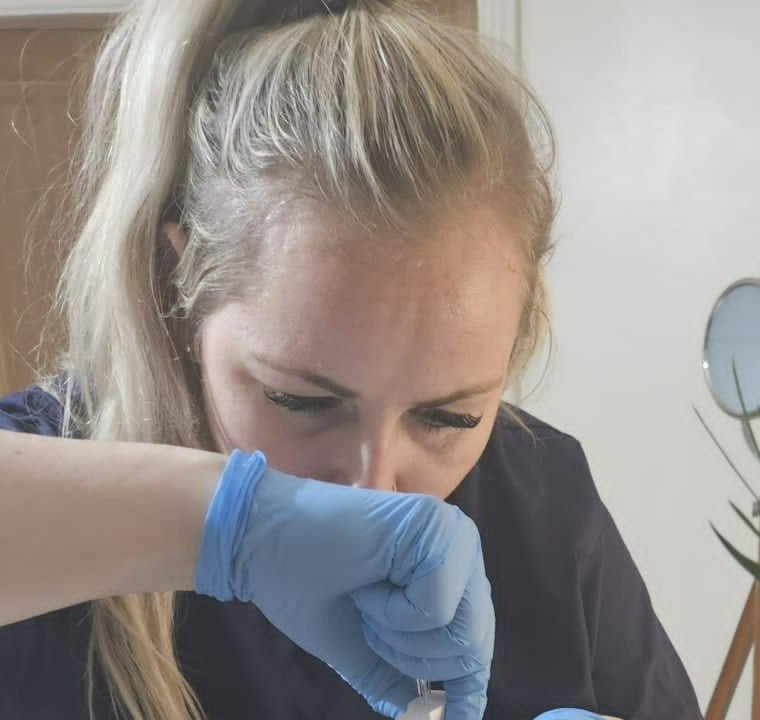
Alicia Marsland, a registered nurse with seventeen years in clinical practice. She does every filler consultation, treatment and review herself. In England no licence is currently needed to inject filler, so wherever you go, ask who will treat you and check their registration.
Is there an age limit?
Yes. We don't treat anyone under 18. In England it is also against the law to give anyone under 18 filler for cosmetic reasons.